


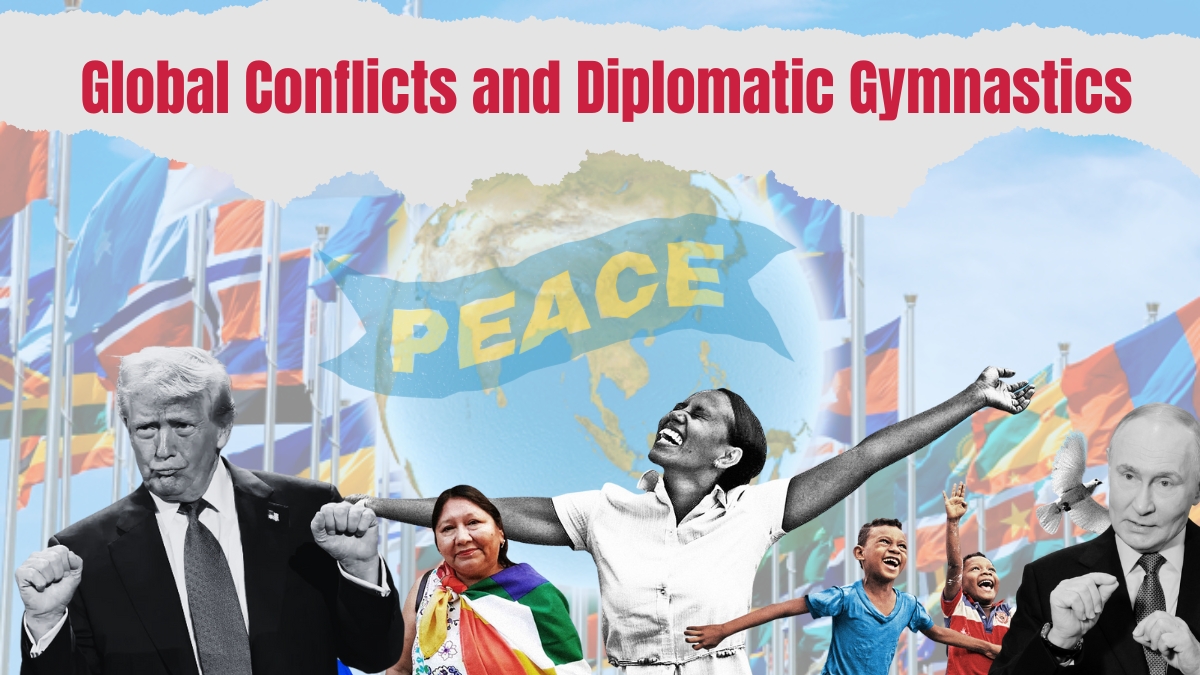
New Delhi [India], January 20: Everyone keeps saying “peace” out loud now. Not whispering it, not even arguing about it. Just saying it, flatly, like a checkbox they’re tired of clicking. Peace talks here. De-escalation there. A summit photo with identical flags and the same half-smiles we’ve been seeing since, what, the late ’90s? I still remember watching one of those on a grainy TV in a university common room, thinking it looked like a hostage video with better tailoring.
But behind the language, the storage units are filling up. Ammunition depots. Data centres. Sanctions packages drafted and redrafted like passive-aggressive emails. Everyone’s talking peace while quietly reinforcing the scaffolding for the next round of damage. That contradiction isn’t new. What’s new is how little effort goes into pretending otherwise.
And look, diplomacy has always been theatre. Anyone who tells you different is selling something. But lately it feels less like theatre and more like improv done by people who didn’t read the prompt. They show up anyway. They talk anyway. The lines come out polished, soothing, familiar. Then they go home and approve another contingency plan that assumes none of it worked.
This always annoyed me, honestly. The way “dialogue” is treated as a moral achievement rather than a tactic. As if the act of talking, in and of itself, absolves the rest. You can say peace a hundred times and still design a supply chain that depends on conflict continuing. Weirdly enough, that’s not even hypocrisy anymore. It’s just workflow.
Take deterrence. We dress it up as stability, which is cute. Deterrence is basically everyone agreeing to stand ankle-deep in gasoline while promising not to light a match. So we negotiate limits. Ranges. Thresholds. Red lines that are never red, never lines, more like blurry chalk marks on a windy day. And every side knows exactly where the others are cheating, kinda, but no one wants to say it out loud because then the music stops.
So the meetings continue. Long tables. Short tempers. Translators who hear everything twice and forget none of it. Press releases written in that bloodless dialect where “frank exchange” means someone slammed a folder shut and walked out. I’ve read those releases for years. They haven’t changed. Same verbs. Same vague nouns. Same commitment to “ongoing engagement,” which is diplomatic code for see you next crisis.
Meanwhile, the problems compound. Not escalate — that implies drama. They accumulate. Like technical debt, except the interest is paid in lives and displaced cities. Climate stress nudges borders. Food prices spike, and suddenly a regional dispute has global fingerprints. Cyber operations hum along in the background, not loud enough to trigger anything formal, just enough to keep everyone exhausted. Don’t ask me why, but this low-level grind feels more dangerous than the old standoffs. At least those had rules people pretended to respect.
And yes, everyone knows this. That’s the bleak part. There’s no revelation left. No secret memo that would shock the room. Officials joke about it over bad coffee. Analysts write it between the lines. The public senses it in that dull, ambient anxiety that never quite goes away. So why the ritual? Why keep performing faith in processes that clearly don’t resolve anything?
Because the alternative is admitting that the system is designed less to prevent conflict than to manage its tempo. Slow it here. Speed it there. Keep it within tolerable parameters for markets and alliances and election cycles. Peace isn’t the objective. Predictability is. And even that’s slipping.
Right, so when you see another handshake photo, another carefully worded statement about restraint, understand what it’s really doing. It’s buying time. Not for reconciliation. For preparation. For repositioning. For moving assets quietly while everyone’s distracted by the optics. I guess you could call that prudence. You could also call it procrastination with a suit on.
What gets lost is the human scale, but not because no one cares. It’s lost because it’s inconvenient. Human consequences don’t fit neatly into briefing decks. They don’t align with fiscal quarters. They interrupt the narrative. So they get acknowledged, briefly, then set aside. Passive voice helps with that. Mistakes were made. Civilians were affected. Lines like that.
And yet, the language of peace keeps coming, relentless, almost desperate. As if repetition might make it real. Really, really real this time. But words don’t weigh much compared to stockpiles. Intentions don’t deter missiles. Promises don’t cool overheated systems already locked into motion. Everyone involved knows the math. They just don’t like the answer.
Anyway, the debate’s done. We’re not heading toward a resolution. We’re circling a managed instability that rewards caution in speech and aggression in planning. Call it diplomacy if you want. Call it realism. From where I’m standing, it looks like a world rehearsing calm while bracing for impact, over and over, because stopping would require changing incentives no one wants to touch.
And so it goes. Talking peace. Building leverage. Waiting.
