


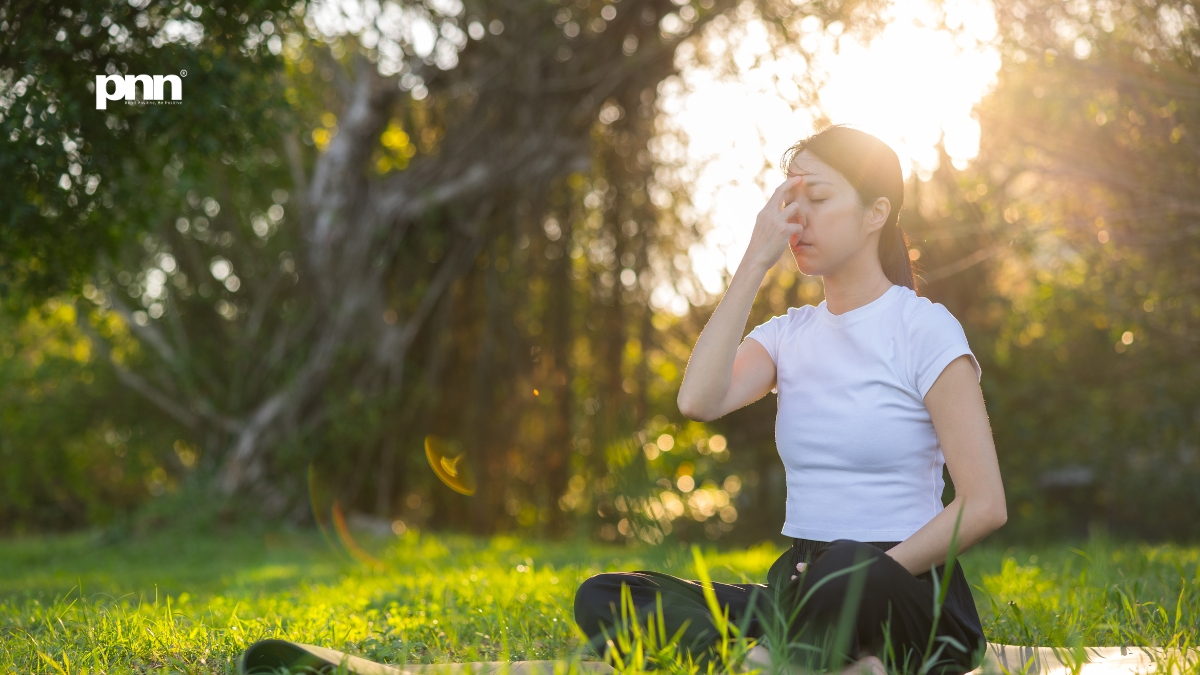
New Delhi [India], February 28: Morning sunlight benefits are not a hack. They are the baseline physiology that most people accidentally erase.
The body evolved under a rising sun, not LED ceilings and notification glow. Yet people troubleshoot insomnia with magnesium stacks and blackout curtains while never stepping outside at 8 a.m.
Before coffee. Before emails. Get light.
How Sunlight Regulates Circadian Rhythm
Circadian rhythm reset sounds sophisticated. It isn’t. Light hits the retina. Specialized cells send signals directly to the brain’s master clock. The clock adjusts its timing. Hormones follow.
Within minutes of morning light exposure, the cortisol awakening response sharpens. Not stress cortisol. Activation of cortisol. It mobilizes energy, increases alertness, and anchors the sleep-wake cycle for roughly the next sixteen hours.
Skip this cue and timing drifts. Melatonin release shifts later. Sleep onset delays. You call it “being a night person.” Often, it’s just weak morning light signaling.
Indoor lighting rarely exceeds a few hundred lux. Outdoor morning light — even through clouds — reaches into the thousands. The circadian system responds to intensity, not intention.
Light exposure therapy has long been used clinically to correct seasonal mood disorders and circadian misalignment. Morning sunlight is simply the unbranded version.
Vitamin D exposure gets attached to the conversation, but early light’s primary function is timing, not supplementation. The retinal pathway regulates the clock. Skin synthesis is secondary and variable.
The mechanism is not mystical. It is photoreception.
Mood & Dopamine Effects
Serotonin production correlates with brightness. Dopamine signaling adjusts with circadian alignment. The result is often described as a natural mood booster. That phrase sounds soft. The biology is not.
When circadian timing stabilizes, neurotransmitter rhythms stabilize. Energy becomes predictable. Irritability decreases. Focus improves.
The morning routine 2026 industry packages complexity — cold plunges, breathwork, supplements. Yet ten minutes of outdoor light does more for sleep optimization habits than most stacked protocols.
There is also cumulative effect. Repeated morning light exposure strengthens amplitude in the circadian system. Stronger amplitude means clearer separation between day and night physiology. Alert when you should be. Sleepy when you should be.
People mistake chronic fatigue for personal weakness. Often it’s misaligned light.
Ideal Timing & Duration
The protocol is simple and unimpressive.
Within 30 to 60 minutes of waking, go outside. Ten minutes if the sky is bright. Twenty if overcast. Longer in winter at higher latitudes. No sunglasses. Regular eyeglasses are fine.
Do not stare at the sun. Just allow ambient light into the eyes. Walk. Stand. Move lightly. The behavior doesn’t matter as much as the brightness.
If mornings are dark due to season or geography, duration increases. Artificial light boxes exist, but natural light remains superior when available.
Consistency matters more than intensity. A daily signal anchors the clock. Sporadic exposure does little.
The body calibrates to repetition.
Common Mistakes
Window light through glass. Insufficient intensity.
Checking a bright phone in a dim room before stepping outside. The first light input of the day becomes artificial and directionless.
Assuming late-afternoon sunlight compensates. It doesn’t anchor the clock the same way.
Treating morning light as optional because it feels too simple to be powerful.
The sleep-wake cycle is not negotiated through willpower at midnight. It is programmed at sunrise.
Morning sunlight benefits are not inspirational. They are corrective. The nervous system expects a dawn signal. Provide it, and timing tightens. Ignore it, and drift becomes normal.
Step outside.
Let the clock set.
Then proceed.
